Space, the final frontier. Even within the gaming community. There are two games that stand out from a realistic perspective; Orbiter and Kerbal Space Program - or KSP for short. Both use newtonian physics and have some very convincing graphics to make the gamer's experience more realistic.
There are three types of realism; visually - where the graphics are crisp, detailed and textured and objects move seamlessly, Intelligently - by which artificial intelligence is well programmed so the player feels he or she is playing with other living people, or when you are given a 'hint' just when you need it, and finally, Physically - where the coding of the game almost entirely emulates the real world forces of physics, meaning objects interact almost exactly how they would in real life.
Orbiter was first published in 2000 (yes, its old) and was praised for its realistic physics engine which allowed players to try and re-create real life scenarios such as a Soyuz TMA launch or the flight of the Discovery shuttle with breathtaking realism. It is used to teach physics to students as well as to gamers who learn inadvertently how to alter the trajectory of a space vehicle. It was last updated in 2010 and remains one of the most (if not the most) realistic comercially availble space simulators of all time. Whlie playing Orbiter i found i became a little bored because there was a certain lack of creativity gamers enjoy participating in, like designing my own rocket or creating an avatar. I then stumbled apon KSP.
KSP is also a space flight simulator but it is more of a game than a simulator. There are little people called kerbals which you can take with you on missions you decide, in rockets you build, which you then fly. There is a feeling of control when you launch a 1,000,000 Kg rocket aimed at the moon which enjoyable at the very least.
Friday, 26 September 2014

Saturday, 26 April 2014
The Difference Between Challenging and Difficult
You may mistake challenging and difficult as being synonymous, but acknowledging the difference is key in the enjoyment and appeal of a game. A challenge is the test of your ability, whereas difficulty requires great effort or skill in order to accomplish a task, often requiring a lot of time. Think of it like this: challenge is the steep slope, whereas difficulty is the brick wall.
When the subject of difficulty in games comes up, Dark Souls is often the first game to be mentioned, so let me do the same. Dark Souls and its awkwardly-named predecessor Demon's Souls are not challenging games, they're plain old difficult. I'll explain why after I do a side-by-side comparison with Super Meat Boy in terms of difficulty vs. challenge.
Super Meat Boy is a game that will send many into a rage, but if you do get eviscerated by a flying saw or swallowed by a salt pit, it's not the games fault, it's yours. The controls are taut and the presentation is clear enough for you to distinguish a hazard from a platform. The designers know that you will die a lot in the levels of Super Meat Boy, so the levels are short and plenty and the respawn time is almost non-existent. It's trial and error, but the error isn't heavily punished since the game knows that three out of four walls are deadly. The punishments for your error are a) losing your progress and being sent back to start and b) being frustrated with yourself for not being able to surmount a simple obstacle. You know where the hazards are and where not to fall, and there are no cheap, unexpected, one-shot insta-deaths, so when you die and have to restart, it's never the games fault. Super Meat Boy blissfully manages to be challenging without being frustrating.
Dark Souls is full of stupid, cheap and unexpected deaths, with insta-killing barrels rolling down staircases with little to no warning. It's organic, sure, but in a way that you can't distinguish a hazard from an objective. When the bosses do come (namely the second one) with no time or warning for you to prepare, they surround themselves with archers and always always one-hit-kill you. And when you do die from unexpected, unfair deaths, you're set back right to the start. That wouldn't be a problem in Super Meat Boy where the levels are short enough for you to recover and learn from, but in Dark Souls, levels are extremely lengthy and arduous, so being set back right to the start with all enemies reset and all progress lost could not be more frustrating. It's not intended for you to overcome a challenge, it's just being plain old mean. A lot of people will disagree with me on this, but Dark Souls is not a challenge, nor is it testing your skill, it's testing your ability to put up with being bullied. To quote Yahtzee Croshaw, "A challenge is one thing, but trying to break down a cement wall with your forehead isn't a challenge, it's grounds for getting sectioned."
Other games can pull of being challenging without being frustrating, like many levels in the most recent Rayman games. The auto-saving is just the right amount of frequent and the controls are taut and a pleasure to behold, allowing you to recover and learn from previous errors. You might say that that's what Dark Souls does; you have to play the level multiple times in order to become familiar with it and learn all its tricks, to which I say, and for what? The skills you learn in previous levels will not help you in later levels because the levels drastically change and the tricks become more varied, more common and even trickier. Learning your way around a hazard or an enemy in Super Meat Boy will help you later on because perhaps that same hazard or enemy may appear in a later stage, like a boss fight. The boss fights in Super Meat Boy are the best kind of boss fights. They're the kind that test your ability and knowledge up to that point, and leave you with a sense of accomplishment. You could say that that's what Dark Souls also does, and I reckon it does, but the only meaningful progress you would make in a level of Dark Souls is a higher tolerance for nastiness, and the boss fights test your tolerance, and surmounting a boss will give you a greater sense of accomplishment. But that's not all there is to a boss fight, or a game as a whole for that matter.
The point of Super Meat Boy is to have fun in facing a challenge, and it pulls it off with flying colours. I'm sure Dark Souls is engaging to the masochistic audience of gamers, but that's not me. I'm glad that games like Dark Souls exist for those that want a high barrier to entry, but that's not fun or engaging, it's just to show off to the internet that you can. If you like being punished by games with a high barrier to entry, that's fine, but understanding the difference between challenging and difficult is important to understanding what games you prefer to play as a consumer and what audience of gamer you're making your game for as a designer.
Saturday, 22 March 2014
'Free To Play' and The Future of Competitive Gaming

See, gaming is still in its baby steps; we haven't had a Picasso or a Stanley Kubrick, and there are many pundits out there that have no shame in titling our medium as 'worse than heroin'. This is expected in the early days of a medium, like when the movie industry was feared in the 60s and 70s because of how film was so life-like in its violence that it could coerce a younger generation of children and teenagers into becoming violent, sociopathic serial rapists. Turns out that didn't happen, and 50 years on films are accepted as mainstream entertainment, where taking your kids to see the new Disney film is now a family day out. Will this happen for gaming? Will there be televised coverages of video game awards? Will game developers and voice actors be held in equally high-esteem to film directors and film actors? Or more relevant to the topic, will turning on a game of League of Legends be as common as turning on the Rugby match?
If we get right down to it, sports aren't really about the sport. Running isn't about getting from A to B in the fastest time possible, because if it was, running would incorporate rocket-powered motorbikes instead. Running is about who can put one leg in front of the other the fastest. Football is about seeing who can kick a circular ball into a square net the best. Basketball is about seeing who can throw a spherical ball into a round hoop the best. Dota 2 is about clicking on an enemy until the enemy falls down. See how I've reduced these sports into pointless objectives? Does it make you want to stop watching or playing football or basketball? No, because sports aren't really about the sport, they're about the athletes, and their strive for success overcoming all odds, facing hardship, defeat or victory. Whether you're the spectator or the athlete, the sport requires a level of commitment, dedication, skill and practice to be the best at. In which regard, how is Dota 2 or League of Legends any different to football or basketball or running?

So what of the future? It's all good and well to be appreciated within your select community, but how will competitive gaming reach mainstream audiences? Firstly, it needs to be easy to understand. A problem that many people had with Free To Play is that it was hard to comprehend key, important moments of the story without understanding the specifics of the game. We need to fix this, for how can professional gaming hope to transcend the gaming community if only a minor percentile understand it? Secondly, there are new games all the time, with updates to the meta rolling in constantly that it can drastically change the game, and that games become dated quickly these days. Chess is hundreds of years old, but it isn't 'dated', whereas Modern Warfare is some seven years old, any many a gamer are quick to call it an 'old game'. Lastly, there needs to be a way for people to easily access these competitive games. The feeling that it is within your power to become the best at the game with enough commitment and sacrifice is enough to keep you and many thousand a gamer playing, and that possibility needs to be easily accessible to everyone. Gaming needs an equivalent of picking up a football and kicking it.
 Free To Play is just the start of the mainstream acceptance of E-Sports, and it's a step in the right direction. It's free for you to watch on Steam and Youtube, and I highly recommend you do; it's not just a strong message about E-Sports, it's actually a really good 3-way character study and a damn good underdog sports documentary. While many will be ready to laugh Free To Play out of the room, it's bravely and seriously tackling a largely unrecognised facet of gaming culture. Non-gamers, prepare to be dragged kicking and screaming into the 21st century, because gaming is no longer a toy or a murder simulator, it's an expressive medium, a the worlds most profitable entertainment industry, and now it's a freakin' sport.
Saturday, 8 February 2014
Flappy Bird's Discontinuation is a Bad Thing
 Flappy Bird developer Dong Nyugen has announced on Twitter that he is taking down his game from the app store within the next 24 hours. For those of you who somehow don't know, Flappy Bird is a simple flight game where you tap the bird to levitate and avoid falling into pipes. That's it. It has attracted popularity due to its intense difficulty, and it has become a game that people love to hate. I won't get into the 'Casual iPhone gamers have been desensitised to the undemanding difficulty of Angry Birds and Fruit Ninja that when they face a game with actual challenge they start freaking out' argument, but instead, I will talk about how the removal of Flappy Bird is a bad thing, even if you or I didn't like the game (which I didn't).
Flappy Bird is an indie game. It was made on a small budget by one guy in Vietnam, so it's not exactly a Triple-A big-hitter in that regard. What I know for a fact is that there are so many more indie games deserved of popularity than Flappy Bird, and I'm pretty sure Dong Nyugen knows this too. See, Treyarch and Infinity Ward can deal with hate because there are hundreds of those guys working on a game, so singling out one person for the horribleness of COD: Ghosts is a challenging task. With Flappy Bird, all the hatred and the anger than spurted from the game was directed straight at one person. Think about that: immense popularity of a game, followed by widespread rage and screaming videos, 1-star reviews, and even death threats. Why did Flappy Bird get so popular? I have absolutely no idea; there are loads of games out there that are designed solely to excite the rage out of their player, so why has Flappy Bird launched to the top?
The discontinuation of Flappy Bird proves that the success of indie games depend on the mental well-being of their auteur. Indie games are mostly made by a small group of people or just one guy, whereas big-budget releases are made by hundreds of people. Those hundreds of people can pass the blame on to the next guy if someone asks why this part of the game is shoddy or broken, whereas if an Indie Game is bad, that goes straight to one person, and they can't dodge it how ever hard they try. It happened with Phil Fish; he made a Futurama reference and everyone thought he was being serious. He said that most modern Japanese games suck (which they do, I mean take a look at Skyward Sword and the recent Final Fantasy games), and the video game press were accusing him a racist and a douchebag. On top of that, people didn't like his game, so their criticism was directed at him directly in a volatile manner, along with all the other accusations of racism and douchebaggery thrown his way. You know what he did? He quit. He quit the games industry. He cancelled Fez II and isn't going to make another game.
What were the games journalists and raging internet keyboard warriors expecting Phil Fish to do when they were calling him a racist and a douchebag? Similarly, what are the screaming YouTubers and raging internet keyboard warriors expecting when they were barraging Flappy Bird with unadulterated hate? I have an answer: views. PewDiePie will get more views on his recent incessant screaming videos by incessantly screaming about the mild challenge of Flappy Bird. News websites will get more hits if they document the false racism of Phil Fish. What happens when another indie game developer decides to have a personality or to make an intentionally hard game? Will they be forced to quit too? Fortunately, Dong Nyugen will still be making games, but he will forever be branded 'The Flappy Bird guy' whenever he appears on an interview or makes a new game.
So yeah. If he actually is taking Flappy Bird down, this is a sad day for indie game developers.

Friday, 7 February 2014
Papers, Please: An Extensive Appraisal
 With all these large development teams big-budgets spent on motion-capture, film-like cutscenes, top-notch voice actors and an elaborate script, a 2D pixel-art game about paperwork tells a better story than any other game this year. It has no voice acting, apart from the 4 separate sound clips of gurble used to indicate speech, it has no cinematic, 20 minute-long cutscenes that make you feel as if you're watching a movie instead of playing a game, the faces that you see past the desk and on the passports were seemingly made on MS Paint, and it was made by one guy. Let that sink it for a moment. One guy, with inexpensive tools and access to Steam Greenlight, told a deeper, more personal, intricate and well-structured story than any video game that came out in 2013. Maybe I'm giving it too much credit, because I like the indie game revolution and it's good to see such a humble game get huge amounts of credit (GOTY awards from Wired, The New Yorker, Ars Technica), but after playing the game a few times, I feel as if I can pin down what I felt was important and resonant about Papers, Please.
From what I've read from different players, the interpretation of Papers, Please different from player to player. Some say it's about a totalitarian government, some say it's about the struggles and emotional toll of a soul-crushingly depressing desk-job, and others think it's just a game about checking paperwork. All of those things are true, but for me, Papers, Please was about mainly power, moral choice and all of its consequences. Moral choice mechanics are handled so poorly in most games, with a binary 'Good' or 'Evil' option. It's what brought down Infamous for me. With these mechanics, it's not about doing what makes sense, or doing what you want, it's about doing whatever will get you the most points so you can get your next upgrade. It's an incredibly stupid mechanic which doesn't belong in any game, indie or big-budget. With Papers, Please, it's not about getting your upgrades, it's about doing the right thing. Your family is on the line here. If you follow the rules with extreme rigour and haste, you will feed your family, but along the way you run into a law-abiding citizen with a minor discrepancy, or a criminal with the correct paperwork, and you must decide between breaking the rules and doing the right thing, or abiding by the rules despite the moral injustice, but you and your family are fed, sheltered and well. What matters most to you?
A main point of criticism for the game was the the central gameplay mechanic was boring. You check paperwork, you either decline or approve their paperwork. It seems boring, but that's not really what is at the centre of the game. The gameplay is intentionally soul-crushingly tedious, to emphasise the bleak and hopeless atmosphere of the game, but it becomes bleaker and less hopeful when your day is interrupted by a terrorist attack, or when someone curses at you for not letting them through, or when that annoying printing sound points out that you've forgotten to check all the discrepancies that no normal human being would really look for or care about; it all takes a toll on you. At the end of the day, you get your paycheck, and here lies even more emotional tolls. All of your money goes to feed your family and maintain their well-being. We can all relate to a family here. We're not using this money for a greater cause, like craft anti-alien weapons or save the world, we're simply working to feed our family. It's certainly relatable if nothing else, and it's what engrosses us; you instantly care about providing and maintaining a family system.
The thing is, your wife and son and mother in law and uncle don't have a name, or a face, or a personality of any kind. It simply says their title, and their state of well-being. Could this be an allusion to the middle-class underachievers in a dead-end job working like a clockwork orange to provide for a family that they don't talk to with no hope or variety in their life? Could the inspector be Lester Burnham or a similar character? Could be, but when taking on the role of a border-patrol inspector, you have the choice to overthrow the totalitarian government you are victim to by way of a rebel group requiring your help to let the right people in (with the wrong paperwork) and the bad people out (with the right paperwork), potentially putting some excitement and fulfilment in your life. Or not. You can carry on with your routine like the bloody coward you are.
It's been 6 months since its release, and over a month since it was awarded numerous Game of the Year awards, but it still remains distinct in my memory. A game about paperwork manages to stick with me longer than The Last of Us and certainly Beyond: Two Souls, and in traditional game terms, it shouldn't be traditionally fun or engaging, let alone artistically resonant and a hallmark of game design. I'm going to go out on a limb here, and say that Papers, Please gets to me more than Telltale's Walking Dead. 'How so?', you may ask, to which I answer, 'Play the god-damn game. It's beautifully bleak, soul-crushing, depressing and claustrophobic, but suprising, morally-questioning, often-hilarious and thought-provoking'. Eat that, Triple-A games industry.
Sunday, 12 January 2014
5 Reasons Why The Elder Scrolls Online Won't Work
So I got in to The Elder Scrolls Online Beta. Due to a strict non-disclosure agreement, I can't talk about the actual game, but what I can talk about is everything surrounding it. Sharing gameplay footage and early reviews are strictly prohibited, but I can still talk about the basic premise of The Elder Scrolls Online, and why it won't bloody work.
1. How is this any different from Guild Wars 2?
For me, Guild Wars 2 was The Elder Scrolls Online. It had a wide variety of classes and option, a huge immersive world, organic exploration and a whole new language you have to learn (*sigh*), which is moreorless the standard for every Fantasy RPG nowadays. It captured the openness and the immersion found in The Elder Scrolls, but made everything a little more polished, like with the map system and inventory which, granted, took a leaf out of Morrowind's book.
So what does TESO have more to offer? How will it improve on Guild Wars 2's fantastic world? How will it improve on the bog-standard combat, and the epic World vs. World? I mean, will it even do that?
2. Why does The Elder Scrolls need to go online?
In Skyrim and Morrowind, I found peace in being alone. Lost. Stranded in the wild. It provoked discovery and exploration, and salvation was found in discovering civilised society. Taking on countless enemies and finding hidden dungeons by myself felt more rewarding than being accompanied by an annoying AI partner. I purposefully got rid of Lydia in Skyrim because it was better for me to travel alone, even though she was a great help. Sometimes, I get away from everything; that's what The Elder Scrolls is all about for me. I like to feel completely isolated in East Jesus Nowhere with only the beautiful sights of nature to accompany me.
So why do I need 200 other versions of me running around with their name floating above their head? How will that improve my gaming experience? Will it be better for me to disconnect every 15 minutes due to a horrible internet connection? Will that improve The Elder Scrolls at all? How will this add to the series in any way?
3. Bugs. Everywhere.
Skyrim was a big game. The Elder Scrolls online is bigger. Skyrim was single-player. TESO is not just multiplayer, but a Massively-Multiplayer Online game. Skyrim was filled to the brim with bugs, so what of The Elder Scrolls Online? From what I've played of the Beta, I can't even create a character without it all crashing, if I can log in at all. It has crashed and disconnected and error-messaged more times than I can care to count. It's not even in early Beta; it went in to Beta testing January 2013. One whole year ago. The game comes out in three months. When I finally got to play it, well, I can't talk about that, but I can talk about how it took longer to get up and running than any other game I've played on PC. I've never had to scroll through a forum for this long in my entire life looking for solutions to problems that shouldn't even be there this late in testing. It's coming out in three months. Three months. You do not want to know how long it took for me to get the game up and running.
4. Why is there a subscription fee?
Do you know who wants to pay for subscription fees? No one, that's who. Do you know who likes convenience and ease with their entertainment? Everyone, that's who. I thought it was a no-brainer for the folks at Bethesda, but obviously not. It's an old business model. In today's market, where you can get an app for $.99 and have hours upon hours of fun, it seems obscene for a game to charge $15 a month for their content. But that's what they're doing.
Hey, do you know what did well? Guild Wars 2. Not only was it good (and it was actually pretty good), it gave you heaps and mounds of seemingly-limitless content, but all for the £35 that it cost. That's it. I pay what I need to get the game, and I can access all of it without spending another penny. Do you know what didn't do well? Every MMO that came out after WoW that made you pay a subscription fee. Really, name a good MMO that came out ofter WoW that is still around today. Do you know why that's a hard? Because there is none. All the good and memorable MMO's that came out after WoW were subscription-free, see Knights of the Old Republic, and its sequel. You could say EVE online, but, really? EVE online? No, not EVE online, because it was bore-tastic. So no, either TESO scraps it's subscription fee and becomes more accessible to, lets say, everyone, or it joins the likes of Tabula Rasa and The Old Republic, and we all know how they went down.
5. Who even asked for this?
Seriously. Who wanted this? Was there a demand for a single-player fantasy RPG turned into an MMO? No, because whomever wanted a fantasy MMORPG since Skyrim has played Guild Wars 2.
If the final version of TESO is anything like the Beta, and on top of that they ask for a subscription fee, and on top of that there will be more people running around ruining an immerisve experience, then TESO will crash and burn like every other MMO that wanted to be WoW that isn't WoW, with the exceptions of MMO's that don't have the gall to ask for your money every month. But I don't know, maybe Bethesda will prove me wrong and I sure hope they do, because I really want this to be good.
Saturday, 21 December 2013
Best Games of 2013

It's that time of year again, where the games cease to release and the game publicists and YouTubers flood to give their opinions backlashing in a fiery rage of idiots complaining about how their favourite game wasn't on someone else's list, instead of, ya know, making their own list. So just like last year, I will make a list of the best games of the year, this year being equally as hard as last year but for different reasons. 2012 was hard to formulate a 'best of' list because it was probably one of the best years in gaming since 2007, which is saying something, because I stand by my opinion that 2007 was the best ever year in Gaming. This year it's hard to formulate a list because there weren't any bloody games worth a mention. Where last year was a year for innovative and delightfully surprising games in which you wouldn't expect, like the unexpectedly fantastic Spec Ops: The Line and Far Cry 3, this year was a breeding ground for mediocre, over-hyped crap.
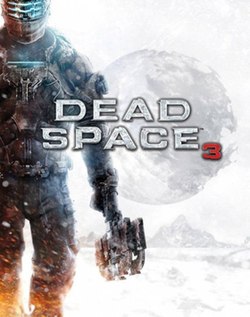 I am willing to crown 2013 as 'The year of the iterative sequel'. We had retreads of previous instalments like Batman: Arkham Origins, Battlefield 4, Assassin's Creed: Black Flag, COD: Ghosts, Lost Planet 3, and the abysmal, depressing bile that was Dead Space 3, being the last nail in the action-survival-horror (whatever that's supposed to mean) genre. Whilst I do apreciate complete reduxes of old series' like with Tomb Raider and that new Mario thing, they weren't very good games in their own right to be included on the list. There was also self-indulgence and pretension this year, more than most other years, with Beyond: Two Souls, The Last of Us and surprisingly GTA5, trying to be this deep, philosophical satire of modern America, but was too heavy-handed and obvious that it reduced the main characters to caricatures stating the obvious at every turn (notwithstanding the painfully unfunny LifeHacker thing on top of that).
Although the bad vastly out-weighed the good in terms of triple-A releases, the indie sector still remains the last bastion of creative and original content. Although there are plenty games to fill the list, I won't lie when I say there aren't enough great, or even good, games that I feel comfortable calling 'one of the best games of 2013', so let's reduce the top 10 to a top 5 list this year.
Oh, I forgot, honorable mentions to games that aren't on the list that everyone will complain about, games that would be on the list if it weren't for a few disqualifications, and games that aren't on the list that would be if I didn't shrink it to a top 5. The Wolf Among Us would be on here if all 5 episodes (A.K.A. the full game) was released, but it wasn't. The same goes for The Walking Dead: Season 2, only one episode came out and I need to judge the game as a whole. Maybe next year. GTA5 isn't on here because I didn't think it was very good, and The Last of Us isn't on here because, whilst decent, isn't good enough to reach my top 5. If this was a top 10, Dota 2 would be No. 6. Okay? Let's start:
5. Saints Row 4
As much as I love thought-provoking, narrative-focused experiences like Spec Ops: The Line, games that try to have that level of impact (Tomb Raider, Beyond: Two Souls) often fail because they don't understand that you can balance serious, gritty realism and light humour. GTA4 did it, L.A. Noire did it, and Max Payne did it. Games that are all serious and all gritty realism blood-fests are the most immature of the lot because they can't embrace simple immaturities that only give more weight to the seriousness they're presenting. So with the dead-serious, gritty authenticity that's been going on this year and last year, it's refreshing to see a game that completely embraces all the immaturities and stupidity of this medium without being shy about it. We know you love killing innocent bystanders on GTA5, but even GTA5 is shy about its stupidity. It still tries to be realistic and serious, but fails because the balance wasn't right. It goes from 'blowing off a guys head with a phone lol' to 'gritty torture sequence' with no justification or meaning for either. It's silly in a bad way. Saints Row 4 doesn't care about trying to balance levity and gravity, nor does it want to have any gravity of any kind (literally), it just goes all out stupid and crazy. You can jump 30 stories high. You can hit a bystander to the other side of the map with a tentacle. You can kick people in the balls so hard that they fly into the air at jet-pack velocity. It's crazy, immature and unrealistic, but so what? It's fun, the soundtrack is awesome, and being a superhero dressed as either The President, a Heisenberg lookalike or Total Biscuit is hilarious. It's the most inclusive game I've played this year; you can enjoy it even if you consider yourself a high-brow gamer, if you're completely new to video games or if you're just a casual gamer, it is filled with so much fun and humour that it's so fantastically appealing you can't not like it. It's simple; if you don't like Saints Row 4, you don't like fun.

4. Gone Home
When was the last time you played a game about a love story? Told by notes scattered throughout the house? About a character that you're not playing as? In the same household? You haven't, that's when. This is an incredibly original game that even trying to talk about it will lead to plot spoilers. It's a story told in such an immersive and original way that it's worth playing simply for that. It's even possible to complete the game in a matter of minutes without looking through the notes. You can play at your own pace, discovering letters and items and notes left around the house meticulously, or you can speed run it and miss the bulk of the game. I thought I was taking my time but it turns out I missed about half of the main story. You can choose your own layer of immersion, and it's fantastic. Ok, a game this original that is actually good is at least worth a mention, but this manages to be one of the years best games because it can pull off the high-wire act of being original, innovative, immersive, twisty, surprising, intricate and good. My advice is to play it knowing as little as possible about the story, which I did. There are no guns, no explosions, no foreigners to shoot, just you, an E button and a big ol' house to explore.

3. Bioshock Infinite
People complain that Binfinite becomes too sprawling and ridiculous that it starts to stop making sense around two thirds of the way through, but it can be credited on its sprawling narrative that encompasses so many themes and it's up to the player to care about what they want. Is it a game about infinite parallel universes? A tale of redemption and self-destruction? A story about a sheltered girl facing the reality of Columbia? Or is it just an excuse to kill racists with a buzzsaw? It's a violent game about a violent subject matter that includes graphic violence, and whilst many people complain about how violent it is, its violence is integral to the story it's telling. See, it isn't really about the multi-universes, nor is it really about politics, racism and philosophy, it's a story about a guy, about Booker, and his conflicting personality Comstock. The barrage of politics and racism and philosophy is all a smoke-screen to cover up what's really at the heart of Binfinite, which is a story about one, lonely, miserable jerk struggling to come to terms with his own failure, guilt and inability to accept responsibility for anything he's done. Stop complaining about the ham-fisted way in which it handled its themes of racism and religion, stop complaining about how the multi-verses don't make sense, it's not about that stuff, it's about this one guy and all of his flaws and consequences. It's not as good as the first one, but it's damn, damn good.

2: The Stanley Parable
What is a game? What defines a game? Is it something with objectives and challenges? Something with agency and choice? Or just something with guns and blood? In The Stanley Parable, there is little challenge or a clear objective. You walk around an office block with a narrator commenting on the directions you take and the things you do, which can lead to an array of different endings. That's just about it. There are no difficulty curves to climb, no dragons to kill or foreigners to shoot, yet it's easily one of my favourite games of the year. It's funny, it's original, it has some deeper themes, ideas and messages, and it has an old, British guy narrating it. Oh, the narrator is also hilarious. With all of the hilarity aside, it does have some pretty good commentary on the state of video game choice-mechanics and 'emoshuns' (coined by Jim Sterling, in reference to a game that tries to pull at your heartstrings but fails horribly). Games like this don't come around often.

1. Papers, Please
You could argue that Papers, Please mirrors the soul-crushing tedium of working as a border patrol guard, which only renders the game soul-crushingly tedious. You could argue that looking for discrepancies in other peoples paperwork doesn't make for a video game. And you would be right, but it's not really about the mundane deskjob that you take on in Papers, Please, it's everything surrounding it. It's the bleak and eerie atmosphere, it's putting your families well-being on the line because you want to let a poor mother see her son despite having the wrong paperwork, it's when you're forced to make a decision between the morally right option and the lawful option. Papers, Please is about off-screen conflict, about the conflicting ideologies of surrounding nations and how you're stuck in the middle of it. I've really never played a game like it. A game that original is at least worth a mention if we're talking about Games of the year. A game that can take a seemingly dull job and turn it to something so engaging is even more worthy of a mention. And a game that can include non-binary moral choices (no paragon or renegade bollocks) that truly affects you is even more worthy of a mention. And with all that, it manages to explore subtextual themes like freedom, collateral damage, terrorism, fear, poverty, and xenophobia without being preachy or pretentious, well, that's game of the year material.

Monday, 21 October 2013
'Gamification'
I signed up to Audible recently, and it's pretty cool (listen to The Things They Carried, it's narrated by Bryan Cranston), but what I noticed was the 'Me' section on the Audible App. It had a Badge Collection, a listening counter, and a listening level, based on how many hours you listened. It seems like a cheap incentive to carry on with the service, but it's clever in the way that it has counters and progress bars for something as arbitrary as listening to audio books. You see this a lot in games, too. You grind through the next activity just to push that progress bar. The activities you're doing are often unfun or mundane, but you just want to push that progress bar up to the next level. A progress or XP bar can be incorporated into any activity, especially school. It's not fun playing through a dungeon or a level that requires repetitive play, but then having a bar to represent your effort, it feels like tangible progress; like you're actually moving forward. This is called 'gamification'.

Audible aren't the only ones doing this. The popular language-learning app Duolingo had courses like levels in a game. You had 10 stages, a certain amount of lives, and a score for every level. There's an XP count, a streak counter, but most interestingly there are tests. The game equivalent would be boss fights; a test that accounts for all you have learned up to that point. Learning another language is certainly difficult, but having an XP bar with an app that teaches you Spanish is genius. For a difficult task, you need motivation otherwise you could easily just give it a pass. You need an incentive. Duolingo has that incentive. It feels like you're making progress with every lesson you do.
For us gamers, we know that leveling up is awesome, but there has to be an incentive for leveling up, like in Call of Duty you can unlock new guns or somesuch equipment, or on Dota 2 where you're more likely to pick up rare items. Figure that out: you need an incentive for the incentive, but it makes perfect sense. You can't just keep leveling up with nothing to go on, you need a reward. You have put in loads of effort to reach the next level, so some sort of reward would be necessary.

It really depends on what you're implementing it into. For Duolingo, perhaps you could get little things like a translating pack for every level that you progress too, that translates a word you're stuck on, kind of like a health pack in a shooter. For Audible, if you exceed a certain level, you could get a free book token. Maybe you do, I haven't got that far yet. Level incentives are important for gamifying your application.
Think about all the good it can do on a broader scale. It's already done good for me; I plough through my school work with the same work ethic I use in matches in Dota or dungeons in World of Warcraft, Skyrim, or Torchlight 2. It's something the younger generation is accustomed to; they're familiar with games like Call of Duty or Skyrim that require level grinding. Incorporating this into something like Mental Arithmetic application for a school will really encourage the younger generation into learning. Winston Church said "I am always ready to learn although I do not always like being taught." Maybe gamification will solve this understandable attitude toward learning.

Audible aren't the only ones doing this. The popular language-learning app Duolingo had courses like levels in a game. You had 10 stages, a certain amount of lives, and a score for every level. There's an XP count, a streak counter, but most interestingly there are tests. The game equivalent would be boss fights; a test that accounts for all you have learned up to that point. Learning another language is certainly difficult, but having an XP bar with an app that teaches you Spanish is genius. For a difficult task, you need motivation otherwise you could easily just give it a pass. You need an incentive. Duolingo has that incentive. It feels like you're making progress with every lesson you do.
For us gamers, we know that leveling up is awesome, but there has to be an incentive for leveling up, like in Call of Duty you can unlock new guns or somesuch equipment, or on Dota 2 where you're more likely to pick up rare items. Figure that out: you need an incentive for the incentive, but it makes perfect sense. You can't just keep leveling up with nothing to go on, you need a reward. You have put in loads of effort to reach the next level, so some sort of reward would be necessary.

It really depends on what you're implementing it into. For Duolingo, perhaps you could get little things like a translating pack for every level that you progress too, that translates a word you're stuck on, kind of like a health pack in a shooter. For Audible, if you exceed a certain level, you could get a free book token. Maybe you do, I haven't got that far yet. Level incentives are important for gamifying your application.
Think about all the good it can do on a broader scale. It's already done good for me; I plough through my school work with the same work ethic I use in matches in Dota or dungeons in World of Warcraft, Skyrim, or Torchlight 2. It's something the younger generation is accustomed to; they're familiar with games like Call of Duty or Skyrim that require level grinding. Incorporating this into something like Mental Arithmetic application for a school will really encourage the younger generation into learning. Winston Church said "I am always ready to learn although I do not always like being taught." Maybe gamification will solve this understandable attitude toward learning.
Tuesday, 8 October 2013
Thoughts on 'Beyond: Two Souls'
Despite the awkward title, I was really looking forward to this, I really was. Ellen Page is my favourite actress and Willem Dafoe is awesome too, and Heavy Rain was somewhat competent as well. I haven't played the game yet, but I want to. I know that it's not going to be as good as I hoped, but I still want to see Ellen Page in every haircut ever, and Willem Dafoe to feature in something that isn't bile. But what else would I expect from David Cage? He's not a very good writer or director. I understand that he wants to progress story in his games but he might just be in the wrong medium.
For those who aren't familiar with David Cage, he directed and wrote Heavy Rain and Farenheight/Indigo Prophecy. He's a fan of the 'choose-your-own-adventure' type of genre; not having much gameplay apart from waggles of the sticks, clunky, awkward movement and Quick-Time Events. Actual gameplay, of course, interferes with the story in David Cage's mind. Having a narrative weaved in to gameplay is an impossible task, apparently, so he chooses to have short moments of a benign gameplay followed by a lengthy cutscene, in which your choices have little effect. But enough of that now.
There's no reason why Heavy Rain couldn't have been a TV drama, or a film, or a murder mystery novel rather than a game. Sure, there are choices to be made, but they're really unnecessary once you complete it. In Heavy Rain, on every playthrough, the identity of the killer is always the same, so there's no point replaying a murder mystery if you already know the mystery, thus making that specific set of choices the only choices that matter. So no, Heavy Rain doesn't belong in games because the interaction is little, the choices, while they result in different endings, are pointless and the atmosphere is little.

So how can David Cage make Beyond: Two Souls any better? By the looks of it, it's very style over substance, in favor of pushing technology than making an actual game, and rather trivial. The whole mocap thing with popular film actors is cool, but it's a very defeatist attitude when you get right down to it. Why have respected game industry veterans in on the project when you can greet video games with Hollywood majestic presence? Almost as if Hollywood is the final frontier for games, or specifically: David Cage.
In recent years, game have been trying to be more cinematic, with Max Payne 3 taking seriousness to its ultimate conclusion, DMC: Devil May Cry having an instagram-esque filter with uber-stylish cutscenes, and The Last of Us trying to be the game equivalent of Oscar-bate. I say leave cinema for cinema. Why make a decent movie with scattered QTE sequences when you can make a great game instead?
By the looks of it, Beyond: Two Souls doesn't look like it has the components to be a great game. It might be a super fine interactive movie with two great film stars, but not a great game. It's a shame, really, because now there's little to look foward to in Gaming Season 2013. Hmm. Well at least there was a Terraria update.
Wednesday, 4 September 2013
"The Video Game Crash of 2014"

There were bloody loads of games, and with loads of games, came loads more consoles. There were 12 consoles on the market by 1983, most of which were Atari 2600 clones, and most of their games were clones of those released on the 2600. The shelves were flooded with bile and cheaply-made games. The 2600 was cheap, starting at $199 then going down to £50 ($77). Games were cheap and there were loads of them. Eventually, the market became diluted, no one bought them, and the industry crashed. It was revived again by Nintendo, with its revolutionary NES. They set the standard model for third-party licensing, with its famous 'Nintendo seal of approval', in which not just anyone could put out a game. They had complete control over what games were allowed to be released, reducing cheap bile that once saturated the market.
 Compare this to today. Our market is being diluted with the same type of game: the shooter. This is due to the popularity of Halo, Call of Duty and Gears of War at the start of the console cycle. They were reviewed incredibly well and sold millions, becoming the three most popular shooter franchises of the current console cycle. Look at the games on the market now. Watered-down Call of Duty's and Halo's and Gears of War's that appeal to that large crowd. Of course they didn't think as to why Call of Duty fans would leave their beloved franchise for a game that's largely similar, and worse. Of course, there are exceptions, like Far Cry 3, Bioshock, Spec Ops: The Line, Fallout 3, Team Fortress 2, and the Uncharted series. What these games did is use a familiar genre: the shooter, but had a twist; they had something different which distinguished them. Whether is be story, setting or aesthetic, they all had something that Call of Duty or Halo didn't offer. That's why (most) of those games were critically and financially successful. Look at Bodycount, Call of Juarez: The Cartel, Kane and Lynch, Medal of Honor 2010, Fuse, Homefront, just go to your local game store and you will find a heavy slog of samey, greyish-brown shooters. Dead Rising 3 is appealing to Call of Duty fans now, Dead Space 3 added a broken coop, reduced the claustrophobic semi-scares and added more guns to make is appeal to Gears of War and Uncharted fans, and Resi6 had loads of explosions, loads of guns, ridiculous action, more guns, muscle-bound gun-bro's, etc. because anything that isn't Call of Duty isn't Call of Duty enough. Don't publishers see this? Dead Rising 3 is already getting angry fanboys bash it, and Dead Space 3 and Resi6 are considered financial failures, as well as getting lukewarm reviews.

Story in games is now on a rise. Spec Ops: The Line started it in shooters, with a main character that became disturbed, deluded and traumatized in a radically different environment, which carried on into Far Cry 3 and the Tomb Raider reboot. Also with the Walking Dead and Journey, which received multiple Game of the Year awards and sold millions. Same with Bioshock Infinite, which dealt with many serious themes and ideas as well as selling 4 million and got a 93 on Metacritic. I may not think The Last of Us is gaming's Citizen Kane, but I certainly like what it tried to do. It had a strong female character, not a ditsy, skinny-waisted, large-breasted female stereotype like most female characters, it had an excellent environment and it had some well-written, truly believable scenes. It's not my game of the year, but it did sell loads and get the best scores of 2013 thusfar. Yet publishers are still churning out samey, greyish-brown shooters that don't sell and receive lukewarm reviews. Why? Why do they keep doing this? Do they think shoe-horning multiplayer and taking away parts of the game for cheap DLC will give them even more money? Because it bloody well won't, and it's up to us to make them realize that.

We are not robots that will automatically buy your *insert popular game here* clone. We are not the same audience we were in 1983, so stop treating us like it. We are entering a new age of gaming. Games go for the price of a burger on Humble Bundles, Steam Sales and the App Store, but the console market thinks 10% off Blood Dragon is a huge deal. Dead Space 3 and Battlefield 3 went on sale with many other games a few weeks ago, for an average price of $5, yet XBLA or PSN think £20 for Borderlands is a steal. When will this end? When the market crashes again? When people stop buying the regurgitated, overpriced, DRM-laden crap on consoles and the market then crashes? What then?
With the new consoles coming out, I am extremely wary of what the industry will become. Whether it will dwell in multiplayer-focused crap or evolve into a truly artistic medium. Whether our community will turn into a hellish, hostile environment of morons, or it will flourish into an educated, smart, analytic consumer-base. This is all up to us. Let us buy not the Call of Duty wannabees and the poorly made, greyish-brown conveyor-belt of creativity-emaciated cardboard boxes made multiplayer, but let us buy the story-driven, significant, deeper-than-a-tea-tray experiences that will resonate and be remembered in years to come. This can turn out positively if we divert out boffing £47 away from EA or Activision, and toward Valve or Telltale or Thatgamecompany. Let this not turn in to 1983.
Tuesday, 27 August 2013
Best Games of the Year (So Far)
I just wanted to make this list before all the big-hitters come out. The Assassins Creed's, the Call of Duty's, the Battlefield's and whatnot. This is the time of year where there's a wee little game drought. Not in the indie sector, mind. There's been quite a bit of content coming out from there. Not very GOOD content, but content nonetheless. Anyway, let us revel in 2013's best games. Indie, big budget and what bog's ends. Lets go:
 I bashed The Last Of Us quite a bit in my initial review, but the truth is that it's not bad. It's pretty competent at best. It's just furiously overrated. 'An emotional journey' my arse, but it's actually just a pretty fun time. It has an awesome world that you can completely lose yourself in. It's achingly sad yet relentlessly beautiful. The Last Of Us is kind of a mess, but it's an entertaining mess at that. It just could have been so much more. The gameplay is alright too, sort of balancing stealth and action whilst having a crafting system that fits with the tone of the game. Explosives and Health Kits are made from the same ingredients, but which one do you value more? I found that to be an awesome touch. Overall, it's pretty fun and well presented, but certainly not gaming's Citizen Kane.
5: The Last of Us
 I bashed The Last Of Us quite a bit in my initial review, but the truth is that it's not bad. It's pretty competent at best. It's just furiously overrated. 'An emotional journey' my arse, but it's actually just a pretty fun time. It has an awesome world that you can completely lose yourself in. It's achingly sad yet relentlessly beautiful. The Last Of Us is kind of a mess, but it's an entertaining mess at that. It just could have been so much more. The gameplay is alright too, sort of balancing stealth and action whilst having a crafting system that fits with the tone of the game. Explosives and Health Kits are made from the same ingredients, but which one do you value more? I found that to be an awesome touch. Overall, it's pretty fun and well presented, but certainly not gaming's Citizen Kane.
4: Antichamber
A cerebral masterpiece. I haven't played a better puzzle game since Portal 2. It isn't as good as Portal 2, but what is, right? It's absolutely mind-bending; distorting reality and physics but it all makes sense within the rules of the game. Making a world as twisty and as sprawling as Antichamber yet still having a consistent rule-set is an incredibly hard thing to do, but the game pulls it off with wonderful style and consistency.
3: Dota 2
I was very critical of Dota 2 in my previous posts, but once you really sink your teeth into it, it's really God-damn engaging. It's certainly not an easy game, that's for sure. It doesn't have a really low XP barrier for level 2, like after 2 kills you get to level 2. No, it's not like that. It's 1000 XP all the time for every level. It gets better as you get further into it, but it's not impenetrable per say, you want to get better at it. It's like you can see the depth but you're not in the depth, but you want to. For a game with one map, it's huge and varied and awesome. There is actual weight when you a kill an enemy. There's actual weight when you level up. This is all just personal preference, by the way. Other people like the game for different reasons, but I like it most for its depth of challenge. Also, there's a Bastion announcement pack. Not only can you enjoy an awesome MOBA, but you also have Rucks from Bastion doing the game announcements. 'Dire structures... didn't make it.' Thank you, Valve.

2: Papers, Please
 There hasn't been a more original game this year. Original in how they can turn and *insert boring job here* simulator into something with actual charm and engagement, which isn't at all superficial nor does it rely on Skinner Box techniques. The boring job this time is not Euro Truck Driver or Airport Firefighter (yes, Airport firefighter simulator is actually a game that exists and requires money in order for you to play it), but is a border patrol man. Which is mostly a boring job in the civilized western world, but setting it in Communist Russia (A.K.A. Arstotzka and other made up names seemingly lifted from Borat) means that forged passports and terrorist attacks are part and parcel in the divided world of Communist Russia. It manages to balance humour and hilariously fake passports with some serious themes like segregation and xenophobia. Should you let the poor wife in without the correct documents, after her husband passed the border? Or shouldn't you? Because letting the wrong people in who don't have the correct documents or those bearing forged documents can take a toll on your credits. Which you obviously need to pay for your son's medicine because he get's the flu more often than a Somalian. Anyways, it's the most amount of awesome you can get out of $10-£7 this year without buying Breaking Bad Meth Candy (That's actually a thing: click here).
1. Bioshock Infinite
 People complained that there was no weight to any of the gore or killing, which is true for Booker's character, because he's a remorseless bastard who only wants his money. For Elizabeth, however, we actually saw the arc of her character from an innocent woman exploring a fresh new world to a darkened, frightened assistant to a killer, with just a little bit of hope of getting to Paris. Combat-wise, it's awesome. Sky-hooks and all. The Vigors don't really have a place here, as it's mostly in service to the brand, and that's true that they didn't need to be there and didn't have any impact on the otherwise perfect world, but that's (mostly) explained with the ending that I still won't spoil. Most of the flaws in the game (pointed out by Extra Credits and most The Last Of Us fans) are mainly flaws down to the main character. He's drunken, bottom-feeding scum who will do whatever it takes, not to save the girl, but wipe away the dept. But later on, it becomes more than that. Also, it's bloody fun as all hell to plough your way through Columbia. That's it. Fun and detailed and awesome. Play it.
Now we wait for the swarm of games released at Christmas time that will one day inspire little Jimmy's high-school massacre. See you on the other side.

2: Papers, Please
 There hasn't been a more original game this year. Original in how they can turn and *insert boring job here* simulator into something with actual charm and engagement, which isn't at all superficial nor does it rely on Skinner Box techniques. The boring job this time is not Euro Truck Driver or Airport Firefighter (yes, Airport firefighter simulator is actually a game that exists and requires money in order for you to play it), but is a border patrol man. Which is mostly a boring job in the civilized western world, but setting it in Communist Russia (A.K.A. Arstotzka and other made up names seemingly lifted from Borat) means that forged passports and terrorist attacks are part and parcel in the divided world of Communist Russia. It manages to balance humour and hilariously fake passports with some serious themes like segregation and xenophobia. Should you let the poor wife in without the correct documents, after her husband passed the border? Or shouldn't you? Because letting the wrong people in who don't have the correct documents or those bearing forged documents can take a toll on your credits. Which you obviously need to pay for your son's medicine because he get's the flu more often than a Somalian. Anyways, it's the most amount of awesome you can get out of $10-£7 this year without buying Breaking Bad Meth Candy (That's actually a thing: click here).
1. Bioshock Infinite
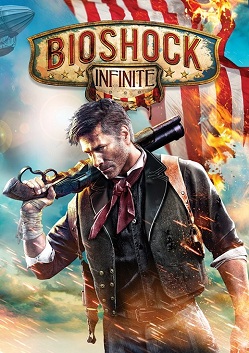 People complained that there was no weight to any of the gore or killing, which is true for Booker's character, because he's a remorseless bastard who only wants his money. For Elizabeth, however, we actually saw the arc of her character from an innocent woman exploring a fresh new world to a darkened, frightened assistant to a killer, with just a little bit of hope of getting to Paris. Combat-wise, it's awesome. Sky-hooks and all. The Vigors don't really have a place here, as it's mostly in service to the brand, and that's true that they didn't need to be there and didn't have any impact on the otherwise perfect world, but that's (mostly) explained with the ending that I still won't spoil. Most of the flaws in the game (pointed out by Extra Credits and most The Last Of Us fans) are mainly flaws down to the main character. He's drunken, bottom-feeding scum who will do whatever it takes, not to save the girl, but wipe away the dept. But later on, it becomes more than that. Also, it's bloody fun as all hell to plough your way through Columbia. That's it. Fun and detailed and awesome. Play it.
Now we wait for the swarm of games released at Christmas time that will one day inspire little Jimmy's high-school massacre. See you on the other side.
Sunday, 25 August 2013
There is no such thing as Game "Addiction"
Or internet addiction, or TV addiction, or film addiction, or lolcat's addiction, or anything like that. However, there is such a thing as 'Game compulsion'. This is because games are compelling, not addicting.
 Gamers are compelled to play. There are levels, goals, objectives, characters to meet, worlds to explore. All of these factors make games compelling. Because the typical game is longer than the typical movie, and with Humble Bundles, Steam Sales and Gamestop, games are becoming cheaper, there's more games to play and more time to play them. We hear stories of children killing their siblings after playing Call of Duty or Grand Theft Auto, but it's mostly due to bad parenting. Why would they leave a loaded handgun in the reach of a child? And because they can't accept the blame, they blame it on Call of Duty, on violent movies, on rock music, on wh
atever the child was mildly influenced by so they can dodge the blame themselves. Who's fault is it that Adam Lanza turned his gun on elementary school students last December? Easy. It was his fault. Just because he played 'violent video games' doesn't make him any less of a mad man.
We hear stories of people ruining their lives playing video games; becoming so heavily invested in games like World of Warcraft or League of Legends that they avoid any kind of human interaction, that they lose their jobs or don't attend school. This can exist without making games a bad thing. I play(ed) both of those games without becoming a basement dwelling troglodyte, and so have my friends. It is the fault of the players for not playing in moderation, or for not controlling themselves or whatever. The reasons why you hear people becoming 'addicted' to World of Warcraft or Call of Duty and not Bastion or McPixel, is that the former games are far more compelling than the latter two independent, smaller games. And that's the bottom line here: video games are not addicting, they're compelling.
 We're compelled to play the next dungeon of World of Warcraft. It offers us in-game rewards and suchlike. We're compelled to play the next game of Call of Duty. It offers us XP so we can better our weapons and upgrades and suchlike. If we played 20 hours of it and had our whole data wiped, we'd be in tears. That whole 20 hours is leading up to something. Or is it? Is it just the joy of becoming more leveled and skilled and earning more bragging points? Or is it something deeper than that?
In life, we go to school, then go to work, then earn money, then have a family, then work more, then retire, then we die. A lot of people are happy with this fact. A lot of people also aren't happy with this. Video games offer those people a place, they offer people comfort and a home. Most of our community is very open. We accept outcasts. We accept 'losers'. We accept those with downs syndrome. We accept war veterans who aren't able to participate in some-such sport or other activity. Games give people comfort in a world they wouldn't have normally found comfort in. We can escape who we are. For 4 hours, 12 hours, 40 hours, or 100 hours, we can become someone else. We can elicit power fantasies we normally wouldn't have.
Sadly, people become too invested in video games, and they become the aforementioned basement dwelling troglodyte. Those who play Grand Theft Auto or any other violence video game and turn their gun on innocent people, they don't do that because their life is perfect. No one picks up a game and wants to kill someone. Likewise, no one picks up a game and becomes 'addicted'. Spending over 500 hours on a game isn't an addiction, it's a compulsion. They're compelled to play more because they've already spent 500 hours on it. Nonetheless, these things can exist without games being a bad thing. We drive cars, right? We know the risks of driving a car, right? We still drive cars, right? Just because cars cause accidents and kill people doesn't mean we should ban them. They are essential to our lives.
 |
| Apparently it wasn't the teenagers fault for going on a rampage, it was the games fault, somehow. It's just another way of dodging responsibility. |
video-game-addiction.org is possibly the worst website to visit about this subject. I suggest you watch this 25 minute long personal story about game compulsion. It shows that there's a difference between a lot of play and a serious compulsion. "Life always welcomes you back."
Thursday, 22 August 2013
In Defence of Call of Duty
 Many of those in the 'highbrow gaming community' slag off COD as being nothing more than a stupid, mindless, racist, artless, homogenized piece of tripe for the masses of annoying 9 to 14-year-olds. Which is mostly true, but there are many things that Call of Duty gets right; things that people don't appreciate as much as I do. So please, at least try to indulge me.
Firstly, 60 Frames-per-Second. Many people complain that Call of Duty has subpar graphics, which is true, the graphical fidelity is inferior to most games that come out, but that's fine, because I prefer swifter, more fast-paced gameplay that an ugly, slugging 30FPS. And Call of Duty is very fast-paced, and the 60FPS benefits the game extremely. Most games prefer huge, sprawling, pointless sky-boxes over swifter gameplay, but Call of Duty doesn't, it prefers a smoother game-feel.
Secondly, the level system. Leveling up in Call of Duty multiplayer mode feels awesome. The first few levels start out easy, then it gets harder, then a lot harder. The difficulty curve on leveling is perfect, encouraging you to play more so you can gain more XP and unlock the new equipment and whatnot. The most interesting part of the multiplayer is Prestige mode. This gives you the option to restart your entire progress from Level 1 to Level 80 or 55 or whatever. All your guns, XP, camos, equipment and unlockables go. And for what? Isn't it much better to be loaded out? But prestiging higher means that you're more respected and well recognized. This isn't a number that goes steadily up, or a bar that gets higher, this is the equivalent to street cred. People treat your ability by your prestiges, and that's awesome. Getting to level 30 on League of Legends is cool, but doing it all again just for a little emblem? That's even cooler. Once you've completed a game, you lose to will to want to play it anymore, but with prestiging, you can play it all again with the added bonus of 'street cred'. You are now a higher being. Awesome.

Thirdly, the aforementioned fast-gameplay is awesome. Small maps are generally better, as they require less trudging from the corner of the map to the battle zone. With a small map, everywhere is a battle zone. With the 60FPS, everything is more clear and fluid, so small maps are actually fun and remind me of the days when shooters weren't a conveyor belt of chest-high walls, which coincidentally is what most Call of Duty campaigns consist of.
Lastly, Black Ops 2 is actually not that bad. It's campaign, whilst short, at least tries to do something more interesting with the series. There are choices, there are alternative endings, there are mini RTS side quests, and the aesthetic and game feel is awesome. The zombies, whilst not great, is still a fun distraction, but it suffered from trying to do to many things, and many of the maps suffered from being heavy on corridors, which just slows down the fast. fluid gameplay to a screaming halt. The multiplayer is pretty much the same with some minor differences, but that's ok, because the multiplayer is actually pretty fun. There are unique game modes and cool guns and there's a focus on small maps, which is much better.
Sure, there are loads of things wrong with Call of Duty, such as a stupid, gaming-illiterate community, most of the campaigns are short and stupid and boring, it's extremely over-rated, it's an incredibly safe series, it's designed for the masses and it made an entire generation of gamers care exclusively about multiplayer and graphics... ok maybe there's a lot wrong with Call of Duty but I still find it to be at least a functional shooter with some cool bits like Zombie mode and those RTS mission in Black Ops 2.
 I just felt I needed to defend this game among those who consider themselves to be too high brow for Call of Duty (me partly included), because this series gets a lot of hate, and it seems like most of the hate is for the sake of it, which sucks, but I can understand it. After all, it's got the worst bloody fans in the world. They make me too ashamed to admit that I kinda like Black Ops 2. Defence over. Go back to over-thinking the metaphors of Braid now.
Monday, 19 August 2013
It's Been a Dull Year (So Far)

Seriously, how many good games have come out this year? So far, my Game Of The Year is BioShock Infinite, which was really bloody good, but there was loads wrong with it. There was also The Last Of Us, which was heavily flawed but still fun and entertaining and was well presented, it's just not the Citizen Kane of gaming. There hasn't been a Spec Ops: The Line yet. A game that really challenges you and the industry as a whole. Maybe Binfinite, but still not as good as The Line. There hasn't been a Journey; a game that's really unique and beautiful. Hell, I'm not asking for beautiful this year, I'm asking for unique. Something short and different and quirky. There was Far Cry 3: Blood Dragon, which was pretty much Team America meets the 80s. It was really cool, but was just a Far Cry 3 re-skin. Antichamber is possibly the Fez of 2013. Different, challenging and indie. I haven't completed it, due to how complicated and huge it is, but it's still possibly my second favourite Game Of The Year.
There have been so many disappointments. Crysis 3 for example. On consoles, it runs like a narcoleptic on a PowerPoint Presentation. But as a game, it's just a dull shooter that doesn't even look that nice. It runs at 30FPS, it's in desperate need of ambient occlusion, and it's just really god-damn boring. To think I was actually looking forward to this. Gah. There was also Dead Space 3, which I knew was going to suck, but still, I was expecting it to be somewhat entertaining. It was; I didn't complete it, but it held my attention long enough to stop me remembering that the game is actually really bloody bland. Look at it in contrast to the original Dead Space games. Sure they weren't great, but it was refreshing to see a mainstream game at least try to be survival horror. If not that, they at least they were trying to be something different. Now, it's just Gears of War in space, which is really freakin' disappointing.
And then there were the crap games. Aliens: Colonial Marines, in which Dead Space 3 was a better Aliens game than Aliens. I'm pretty sure it goes without saying now; birds fly, fish swim, and Aliens: Colonial Mariens was crap. What about Star Trek? We all know that video game adaptations of films suck weenus, but I was hoping that this would be at least mildly entertaining. Whatever. Video game adaptations of TV, however... The Walking Dead: Survival Instinct looked quite cool. I like a good DayZ clone that isn't laggy and still in Alpha. But no, it was bland, boring and crap. And too short, like all the other games I've mentioned.
Since there seems to be no life or originality in the Triple-A market, it's up to the indie market to remind us that gaming is still worth defending. There was Antichamber, but what else? Seriously, what else has there been? There was Gone Home and Bleed that look mildly interesting but still haven't played. There was Battleblock Theatre which looks so hilarious and awesome but I don't own an Xbox. It has to come to PC at some point. I mean, it has to.
 Oh, DotA 2. Hasn't that been out for a while though? Oh no, it was just in Beta for ages. Its official release date was July 9th, and yes, I have played it, and it gives me a headache. I can tell this is only for the hardcore crowd of PC gamers. I really don't see the appeal in things like DotA and League of Legends. It's bloody impenetrable. I've played an hour of DotA 2 and surely by that time things would start getting interesting, but it doesn't. Oh, you know how when your character moves, the camera moves with you? There's an option to change that on LoL so you have to manually move the camera separate to the character. I hoped the same would be for Dota 2, because they're the same genre. "Well, hope into one hand and s**t in the other, and see which fills up quicker!" says Valve, "Because we don't want you horrible console gaming scum on out turf!". "What's that?" says Valve, "Approachable? Options? FUN?! Not on our PC gaming hardcore crowd, you don't! Paint yourself generic fantasy, add hats and an asshole fanbase, and you've got yourself a hardcore PC game!" I'm sure it gets better later, but that's not an excuse. There are so many brain-cells I'm willing to squander.
On an unrelated rant, where the bloody hell is Half-Life 2: Episode 3? Valve seem to have enough time to make Left 4 Dead 2, Portal 2, and DotA 2 after the last episode, but not enough time to wrap things up after that?! Valve are really starting to piss me off. They don't even make any announcements about it. Portal 2 was my game of the year, yes, but I would have preferred another episode. Half-Life 2 is my favourite game ever, and Valve fear that. They fear that they will cock-up a beloved franchise, and it only gets worse with time. Do Valve have the ability to make a game that lives up to 6 years of expectations? I think so, but I doubt Valve think so.
Let us be looking forward. We still have Saints Row 4 and The Bureau: XCOM Declassified to keep us busy until the annual series' start showing up. The COD's, the Battlefields, the FIFA's, the Assassins Creeds, and with the new consoles coming out soon, we might be able to see some new, revolutionary games. Or they could all suck. I'd say 50/50, apart from The Bureau, because there is no way Mad Men combined with XCOM can fail. No way.

Sunday, 18 August 2013
'Loneliness'
http://www.necessarygames.com/my-games/loneliness/flash
Play it first, then read this.
It's a 3-minute flash game. It was made by two guys. One guy did the music and another guy did the actual game. It consists of one block moving into other blocks, and the other blocks disperse once you have done so. Yet this the most touching and deep flash game I've played.
This is an article on the typical school week in Korea. "The Korean Teachers' and Education Workers' Union (KTU) found that 27.9 per cent of students say, "I eat alone."" My friend said that an average study period for a Middle Schooler in Korea is 12 hours a day. More often than not they have a 1-day weekend. Yet South Korea are such a progressive country, economically and culturally. Working that hard and that consistent leaves out any kind of human interaction. But that's off topic...
 The topic of Loneliness is indeed loneliness, in which a title has never been more clear in describing the game. It's incredibly simple; you move your block until the game ends, but along the way there are other blocks that are jumping about and moving and having fun, but when you go up to them, they stop, disperse and fade. It has no tutorial, no little speech bubbles or objective markers along the way, no forms of text at all until the end; it simply conveys its message through the gameplay. It does this so powerfully.
Its power is not only expressed through the beautiful, looping piano riff, but through the implicit choice. What did you do whilst playing Loneliness? Did you purposefully avoid the other blocks because you didn't want to ruin their fun? Did you go up to every single group? Did you go up to every group then give up after a while because you knew they would go away? Did you avoid them all throughout the game, but approached that last block in hope that he would partner with you? Only to find out that that block would disperse like the rest of them. More importantly, what do these choices say about you? Are you a person who doesn't want to get involved with other peoples business, and stays away from them? Are you a confident type who approaches everyone anyway? Do you give up trying to socialize after everyone rejecting you?
Think of the symbolism as well. These are small, black blocks. You are a small, black block. You are the same as them. They don't know that though, so they stay away from you because you're not part of their group. You're the same as them, just that they fear change, they fear being challenged by another block. So they leave. There's also the symbol of a black block on a white background. You're black, and the background is white. Hell, the world is white. You contradict the world. It would be better for you to fit in with a crowd of black blocks, so the world wouldn't feel so different, so opposite, so scary, so big.

The background then stops being white, it starts becoming grey, then darker, then darker, then black. You descend into darkness. This means two things. One, that you have become so used to being isolated and lonely, that the world becomes the same colour as you. You are now used to a cold, unwelcoming and lonely world. A world where you fit in. Two, that you descend into darkness. You have become lonely and isolated that you become a darker person. You become darker, and darker, then black.
We've all been lonely once in our lifetime. I had a lonely childhood. I had one or two friends that I had when I was younger, and a friend I was really close with when I was younger. But then he left to Australia. I was on my own from then on. I was constantly excluded, bullied, lonely and picked on. I was picked on because I had no friends, and I had no friends because I was picked on. This game feels a lot like my early school life. I was alone, and decided I was going to join in and play with someone else. They rejected, and went off. I went to another group, which rejected me and went off. This has happened to all of us at some point.
Once you finish the game, it ends with a message. It's a message so powerful and thought-provoking. A message that can convey so much emotion and satisfaction that many games with big budgets and huge man-power fail to do with pages of script. It reads:

Now read that article again. These kids are so forced and pressured into doing well that they don't have time for any human interaction. Despite them doing really well in school and whatever instrument they play, they will still be alone. This is what I think Edmund McMillen's Aether is about. That a kid riding on a monster goes round solving problems and becomes so focused on his work and objectives, that when he returns back to Earth, it's so small that when he touches it, the Earth shatters and then just goes floating in space. It says that when you work so hard and so long on something, you lose sight of Earth and what is real, that when you come back to it, it breaks under your feet.
With Loneliness, you're not encouraged to do anything apart from move until the game ends, just that there are other blocks along the way in which they are optional to interfere. And that's what life is. You keep on moving. It's depressing and unwelcoming, but you deal with it because you have no other options. Your option is to move forward. Move through whatever curve-ball life throws at you. After all, what other option have you got?
Subscribe to:
Posts (Atom)